
Case Study
Bathroom Leak Detection in Brighton Identifies Ensuite Shower Room Source
Water Through The Ceiling Traced To An Ensuite Shower Room
Water was reaching the flat below, although the bathroom first suspected by the client was not responsible. A combined leak investigation ruled out that room and identified the daily-used ensuite shower room as the relevant source area.
Google Reviews ★★★★★ 5.0 Rating 70+ Reviews Read Reviews- ✓ Leak Located
- ✓ Initial Bathroom Ruled Out
- ✓ Ensuite Source Area Identified
- ✓ Insurer Report Supplied
The Challenge
Water Reaching The Flat Below From An Unconfirmed Bathroom Source
The client arranged an investigation after water came through the ceiling of the flat below. One bathroom was initially suspected, but the visible location of water on a lower level could not confirm which room above was responsible, so both the assumption and the surrounding bathroom areas needed to be tested.
- ✓ Water was coming through the ceiling of the flat below
- ✓ The client initially suspected one bathroom
- ✓ The apparent position of the water did not confirm the source
- ✓ Testing was needed before the responsible room could be identified
Investigation
Investigation Evidence
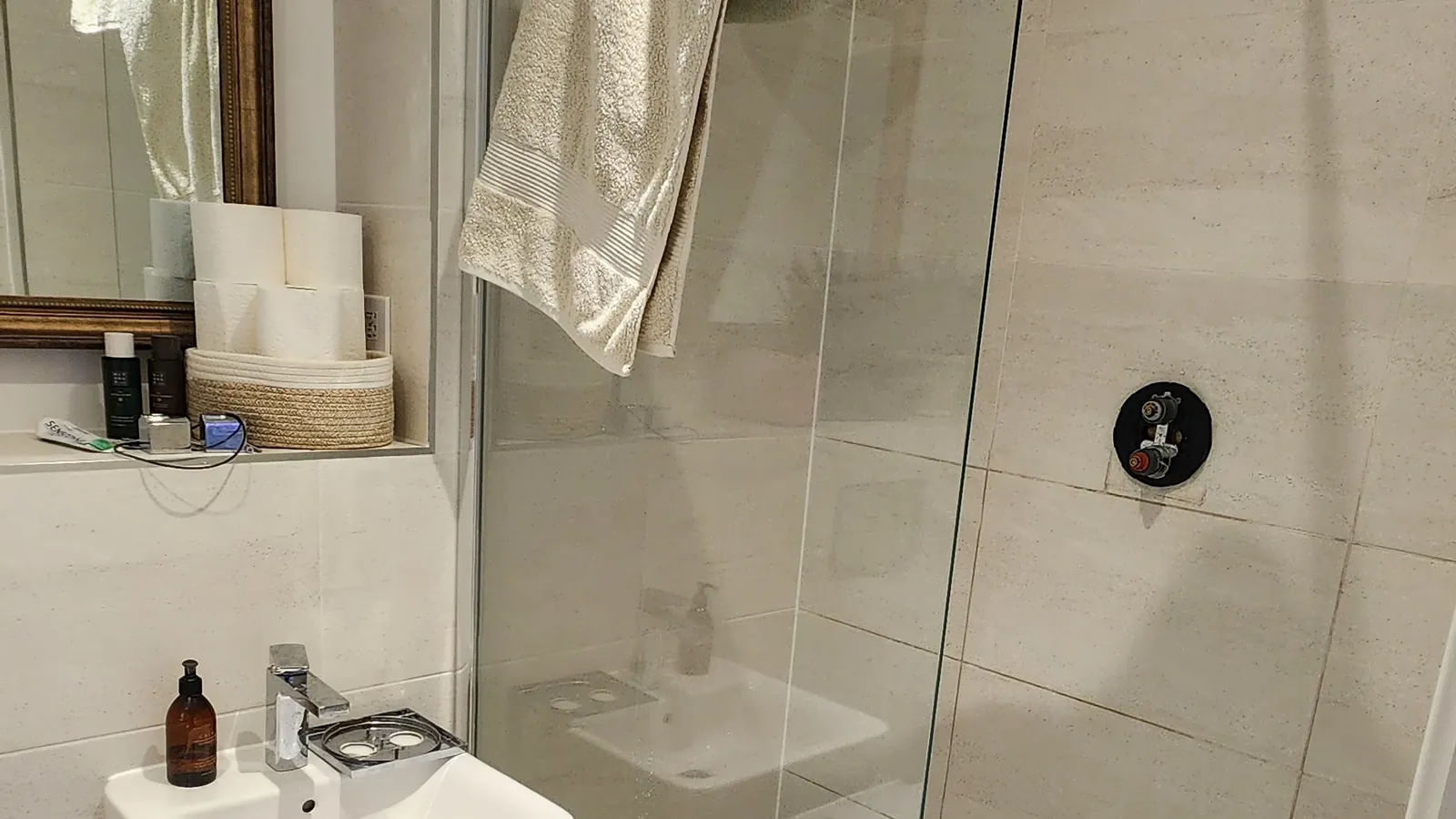
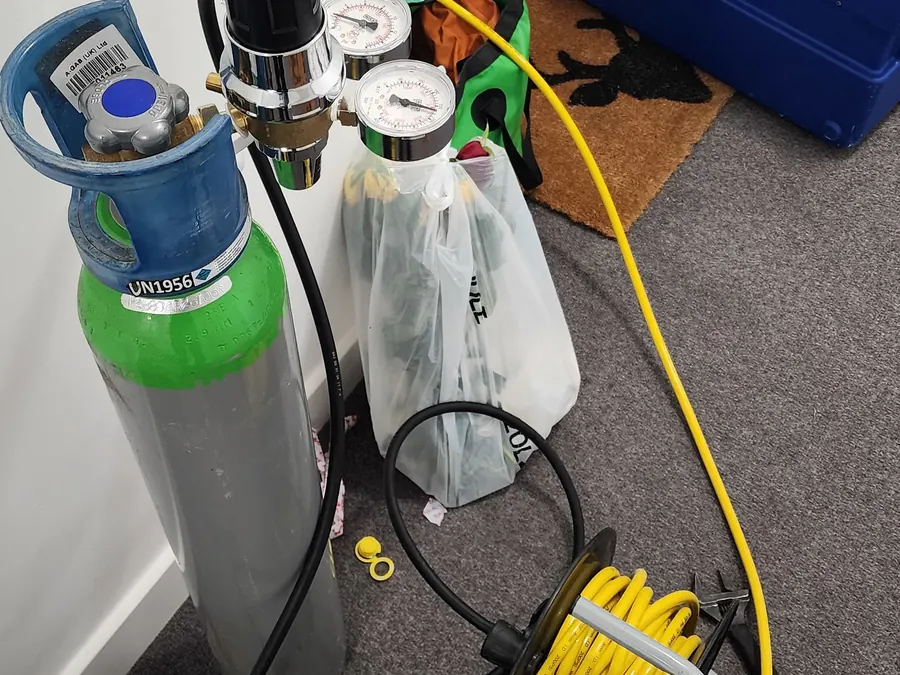
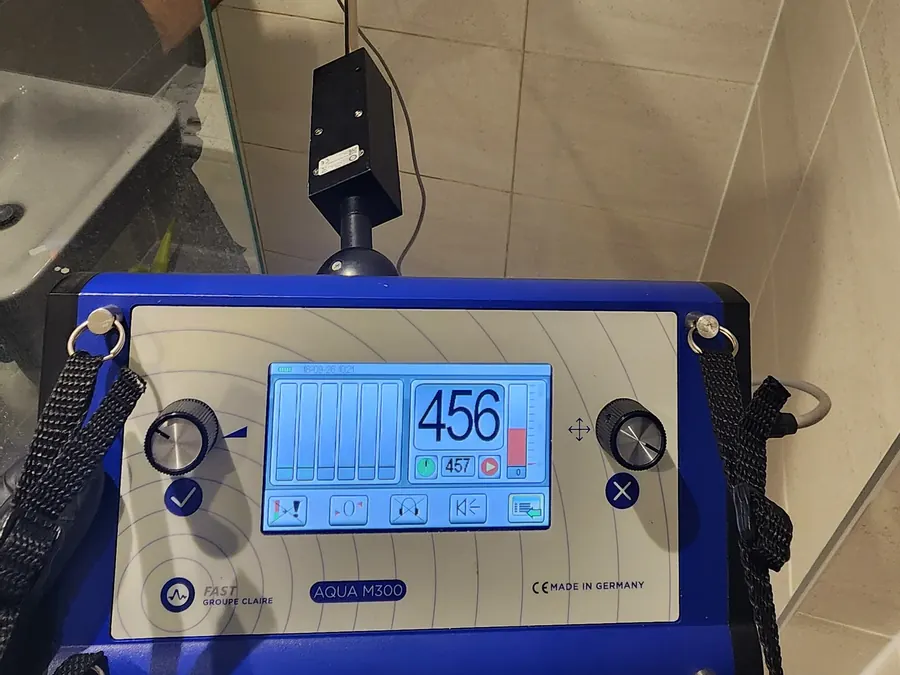
Selected photos and videos from the investigation sequence showing the evidence-led approach used on site.
Investigation
Comparing The Suspected Bathrooms With Several Test Methods
Thermal imaging, tracer gas, pressure testing and visual inspection were used as part of the bathroom leak investigation. The methods provided different forms of evidence, allowing the initially suspected bathroom to be ruled out and the ensuite shower room to be identified as the relevant source area without attributing the finding to one test alone.
Thermal Imaging
Temperature differences can help direct a bathroom investigation when water is appearing in the property below but the source is not visible.
Thermal imaging was used while the possible bathroom source areas were assessed.
No individual thermal reading was supplied, so this method is treated as part of the combined evidence rather than standalone proof of the source.
MethodTracer Gas
Tracer gas testing can help assess concealed water routes when the room first suspected does not explain the reported damage.
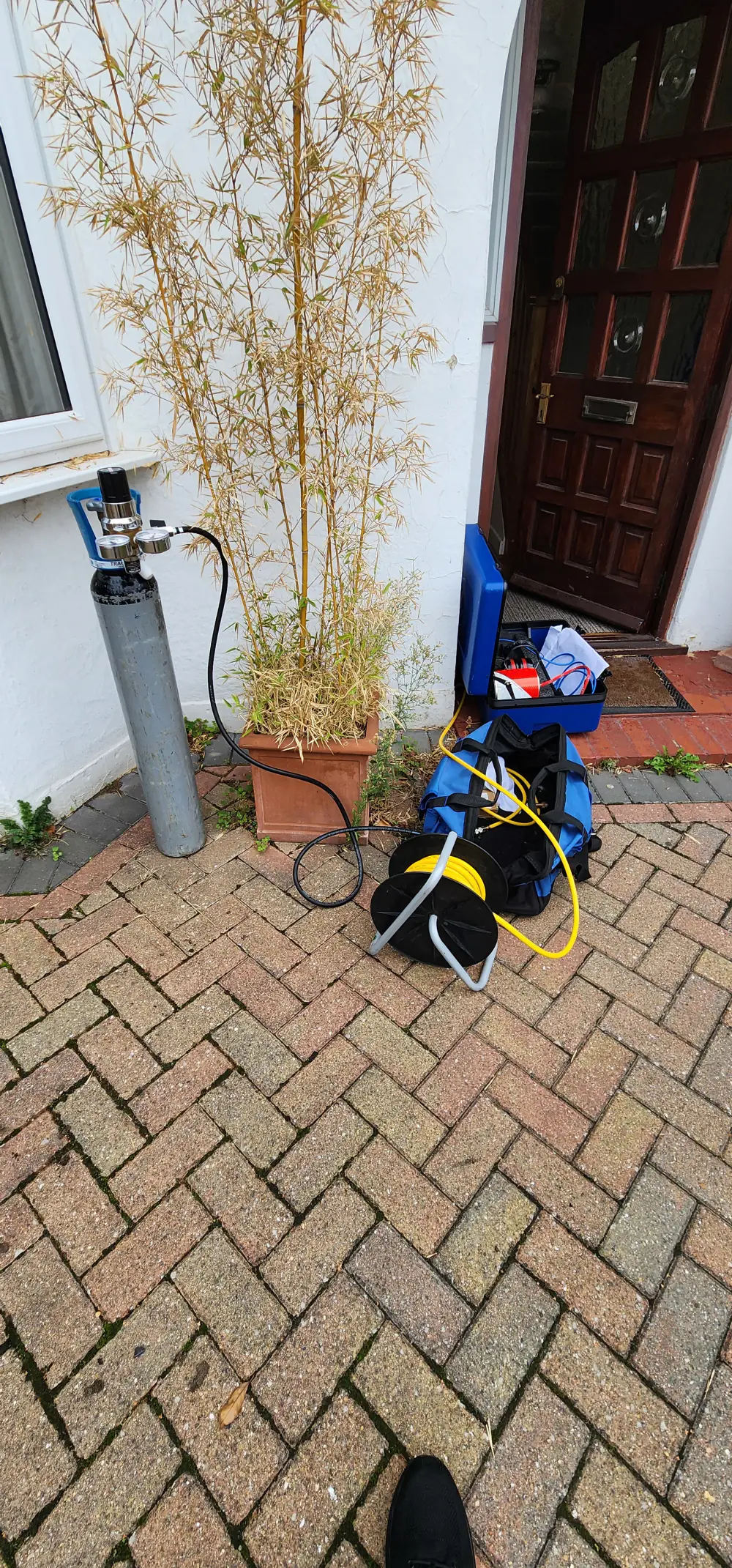
Tracer gas equipment was used during the investigation of the bathroom areas.
No separate tracer gas result was recorded, so the finding is presented as the conclusion of the investigation as a whole.
MethodPressure Testing
Pressure testing helped include pressurised pipework in the structured checks rather than assuming the visible bathroom area was responsible.
Pressure testing was completed as one part of the investigation.
The submission does not provide individual pressure readings, so this method is not presented as independently locating the leak.
MethodVisual Inspection
A visual inspection helped compare accessible features in the suspected bathrooms and place the instrument findings in context.
The bathroom first suspected and the daily-used ensuite shower room were assessed during the visit.
The inspection supported the combined conclusion that the first bathroom was not responsible and that the ensuite shower room was the relevant source area.
Findings
The First Bathroom Was Ruled Out And The Ensuite Identified
The investigation established that the bathroom initially suspected by the client was not causing the water damage. The leak was located and confirmed in relation to the shower room in the ensuite bedroom, which was used daily. The engineer submission does not identify the exact failed component, so the finding is limited to the confirmed source area.
- The initially suspected bathroom was not causing the water damage
- The daily-used ensuite shower room was identified as the relevant source area
- The leak was located and confirmed
- No exact failed shower or plumbing component was recorded
Outcome
Source Area Confirmed And Reported For The Insurer
- ✓ Leak Located
- ✓ Initial Bathroom Ruled Out
- ✓ Ensuite Source Area Identified
- ✓ Insurer Report Supplied
The investigation gave the client a confirmed source area rather than relying on the original assumption about the other bathroom. A report documenting the findings was supplied for the client to present to the insurer. No repair or insurer decision was recorded in the submission.
Investigation Insights
What This Investigation Shows
- ✓Water appearing through a ceiling does not always identify which bathroom above is responsible, so the first suspected room may need to be tested rather than assumed.
- ✓Using several investigation methods together can help rule out one area and focus attention on the room supported by the combined evidence.
- ✓Confirming the source area and documenting it for an insurer are separate from identifying an exact failed component or completing a repair.
Local Coverage
Leak Detection In Brighton
This investigation was completed in Brighton, East Sussex.
We regularly carry out leak detection investigations across Brighton and surrounding areas.
Related Services
Services Used On Similar Projects
Related Guidance
Related Problems And Technologies
Related Case Studies
Similar Project Examples
Mains Water Leak
High Water Bill Investigation in Twickenham Locates Leak Near Water Meter
A large bill inconsistent with reported low usage led to testing that confirmed a leak near the water meter for repair planning.
Underfloor Heating Leak
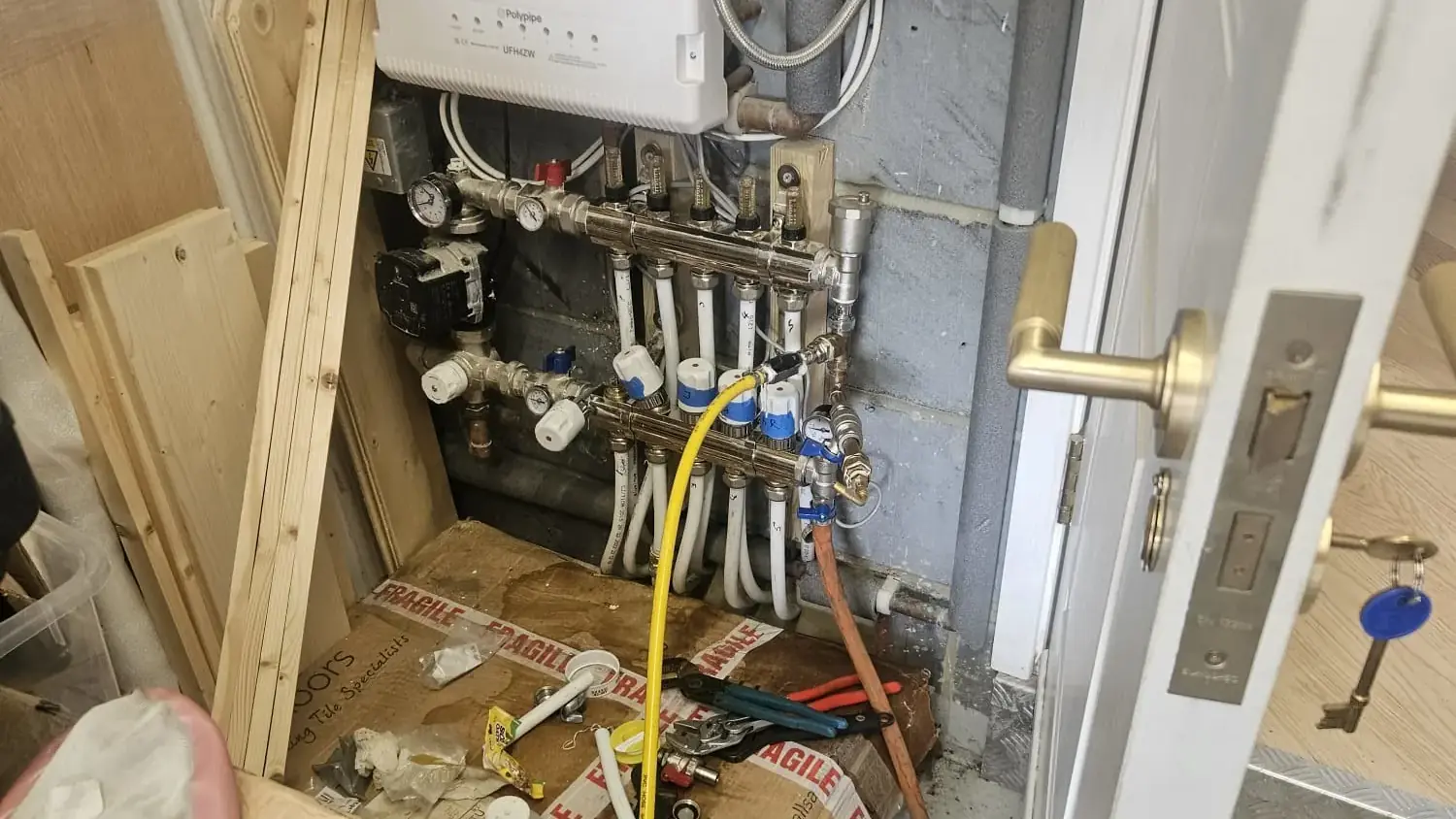
Underfloor Heating Leak Detection in Thames Ditton
A plumber identified pressure loss on an underfloor heating circuit in Thames Ditton; combined testing narrowed the issue to an area beneath the wood flooring.
Damp Or Moisture Ingress
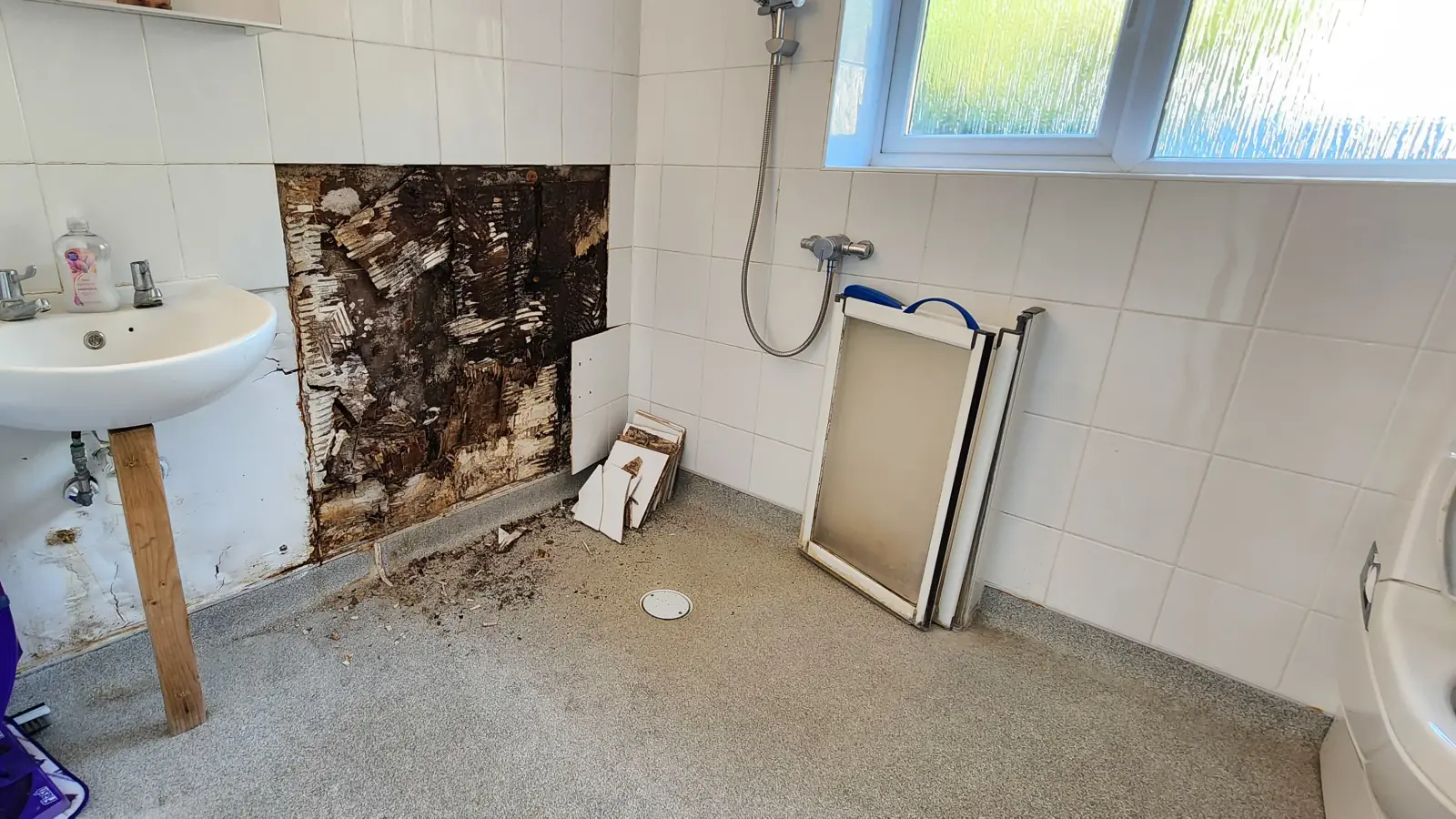
Bathroom Leak Detection in Datchet
Loose bathroom tiles and a smell of damp were traced to water penetrating the grout joints and being absorbed into the timber substrate behind the tiles.
Request a survey
Request A Similar Leak Investigation
If you have water ingress, damp patches or suspected bathroom leaks, our engineers can investigate the source.