Leak Detection Technology

Professional Leak Detection Technology

Investigation methods are selected around the symptoms, pipework, available access and evidence at the property. No single technology is suitable for every suspected leak, and several methods may be compared where appropriate.

  • Methods chosen for the system and symptoms
  • Findings interpreted together, not in isolation

Core Investigation Methods

Leak Detection Methods We Use

Each method answers a different question. Engineers compare the useful evidence with the method's limitations before deciding what the findings mean.

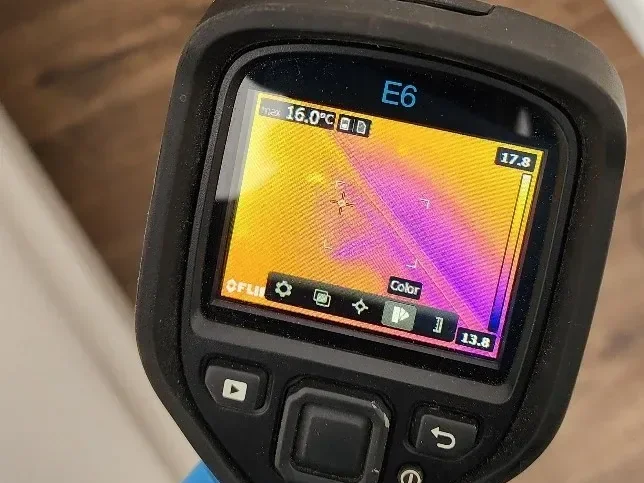
Thermal imaging camera used during a leak investigation

Thermal Imaging

Shows surface temperature differences that can help assess hot pipework, heating circuits and some moisture-related patterns.

May Help With

  • Heating and hot-water pipe routes
  • Temperature changes across floors or walls

Limitation

Temperature patterns are not proof of a leak, and cold, slow or insulated leaks may not produce a clear thermal signature.
Explore Thermal Imaging
Tracer gas sniffer used to investigate concealed pipework

Tracer Gas

A detectable test-gas mixture can help narrow an escape point from suitable isolated pipework without opening broad areas first.

May Help With

  • Concealed or buried pipework
  • Supply pipes and sealed circuits

Limitation

The pipework must be suitable for testing, and construction layers or gas movement can affect how findings are interpreted.

Explore Tracer Gas
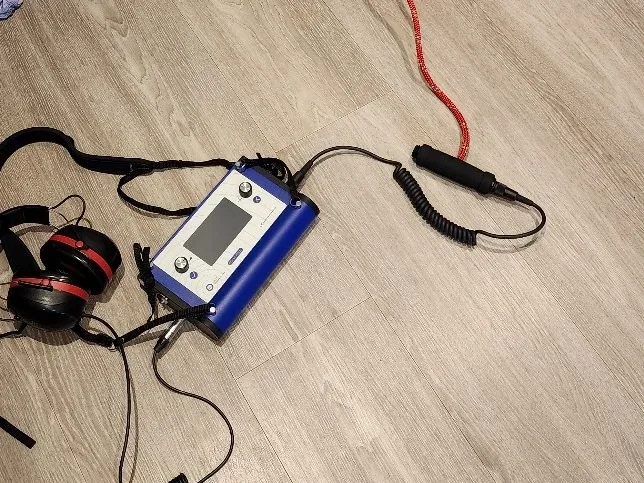
Acoustic listening equipment used during pipe leak detection

Acoustic Detection

Sensitive listening equipment helps compare sounds produced by water escaping from pressurised pipework.

May Help With

  • Pressurised water pipes
  • External and underground supply routes

Limitation

Pipe material, depth, background noise and the size of the escape can all reduce the usefulness of acoustic evidence.

Explore Acoustic Detection
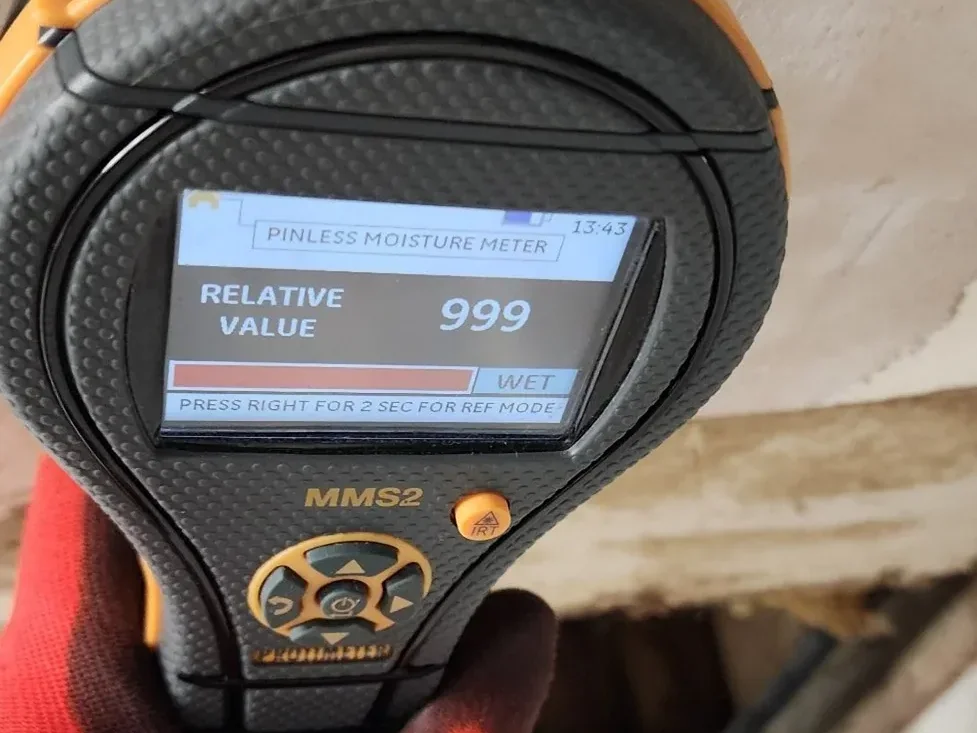
Moisture meter used to map water movement in building materials

Moisture Mapping

A sequence of moisture readings helps show the extent and direction of moisture through floors, walls or ceilings.

May Help With

  • Damp, staining and affected finishes
  • Comparing wet and dry areas

Limitation

Moisture readings show where materials are affected but do not independently prove the source or cause of the water.

Explore Moisture Mapping

Supporting Methods

Additional Investigation Techniques

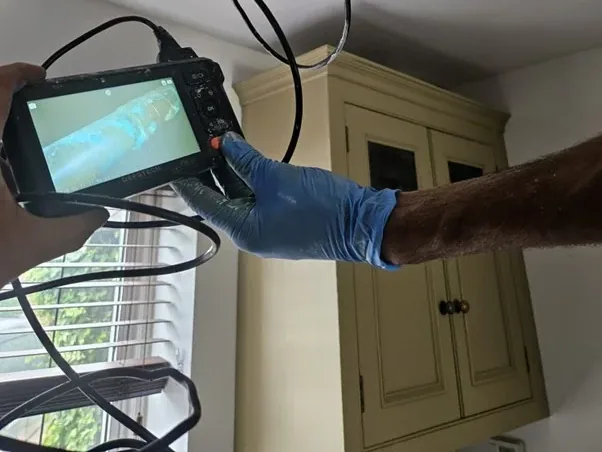
Endoscopic camera used to inspect a concealed leak detection area

Endoscopic Camera Inspection

Small inspection cameras are used to visually check concealed voids, pipe routes and difficult-to-access areas before opening up.

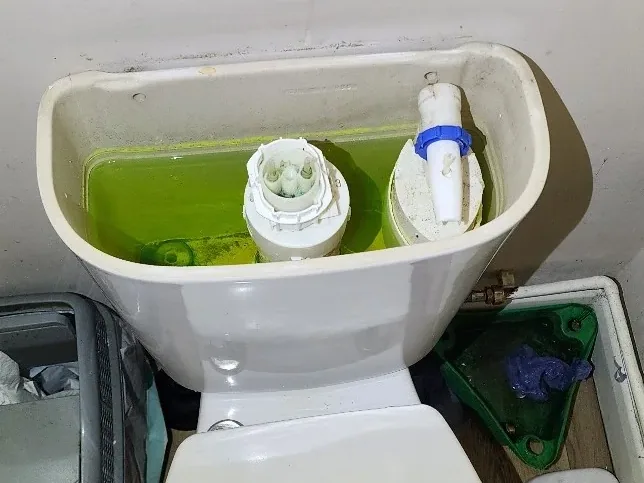
Dye testing used to trace water movement during leak detection

Dye Testing

Coloured test dye can help confirm water paths, waste leaks, bathroom leaks and suspected escape routes.

Explore Dye Testing
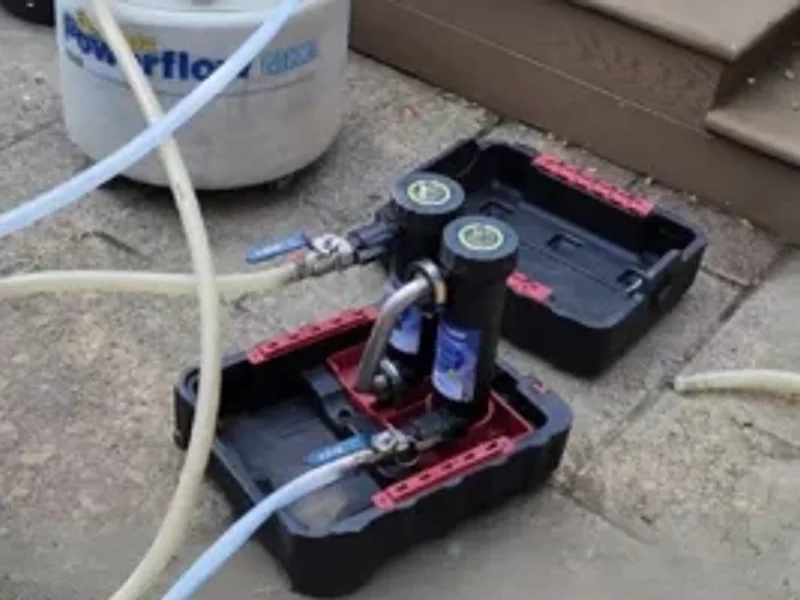
Pressure testing equipment used to check sealed pipework during leak detection

Pressure Testing

Controlled pressure testing helps identify whether sealed pipework or heating circuits are losing pressure.

Explore Pressure Testing
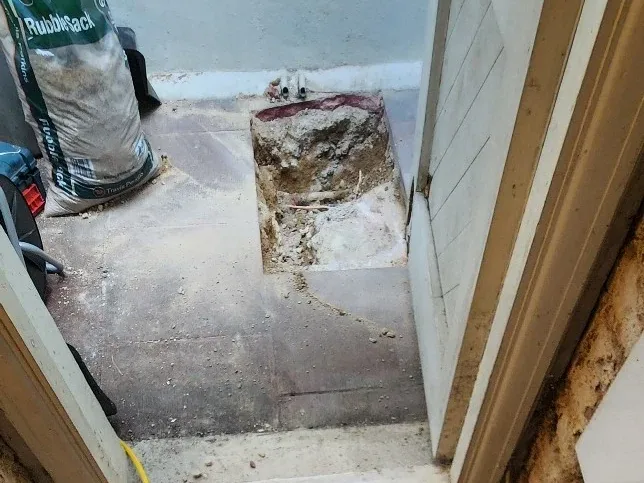
Tracer gas equipment selected during a professional leak investigation

Method Selection

How We Choose The Right Technology

Selection starts with the property and evidence, not a preferred tool. The same symptom can require a different approach depending on the system, construction and access available.

  • Reported symptoms and when they occur
  • Pipework or system type
  • Whether the system can be isolated
  • Access restrictions and pipe routes
  • Floor, wall and surface materials
  • Findings from earlier checks or tests
  • Whether more than one method is needed

Technology supports professional interpretation. A reading, sound or image is not automatically proof of a leak until it is considered with the wider investigation evidence.

Investigation Journey

How A Typical Investigation Works

The sequence is adapted to the property and findings. It does not guarantee that a leak will be confirmed, that all access can be avoided or that repair work is included.

01

Review Symptoms And History

The engineer reviews what has changed, when the symptom occurs and any checks already completed.

02

Initial Checks And Isolation

Accessible systems, valves, meters and likely routes are assessed where the property allows.

03

Select Appropriate Methods

Testing is chosen around the system, construction and evidence rather than a fixed equipment list.

04

Compare Findings

Results from different checks are considered together to distinguish useful evidence from unrelated readings.

05

Report And Recommendations

The findings and limitations are explained so the appropriate repair or further action can be planned.

FAQs

Leak Detection Technology FAQs

Which leak detection technology is most accurate?

Accuracy depends on the system, symptoms and property construction. The most useful evidence often comes from comparing appropriate methods rather than relying on one tool.

Can thermal imaging find every leak?

No. Thermal imaging can reveal useful temperature patterns, but cold water leaks, slow leaks or pipework behind insulating materials may require other checks.

Is tracer gas safe for leak detection?

Tracer gas testing uses a suitable test-gas mixture where the pipework and system conditions allow. The engineer assesses whether the method is appropriate before testing.

Does acoustic detection work on all pipes?

No. It is most useful where sound can travel through pressurised pipework. Pipe material, depth, background noise and leak behaviour can reduce its effectiveness.

Why is moisture mapping used?

Moisture mapping helps show how far materials are affected and where water may have travelled. Those readings need to be interpreted alongside the property, symptoms and other investigation findings.

Discuss The Symptoms

Unsure Which Investigation Method Is Relevant?

Describe the property, system and symptoms. The team can review the context before recommending an appropriate investigation route.

Call Now Get Quote